

Want To Discuss About The Transport Facility?
Supply Chain Management Importance: Why And How It Drives Economic Stability And Business Growth
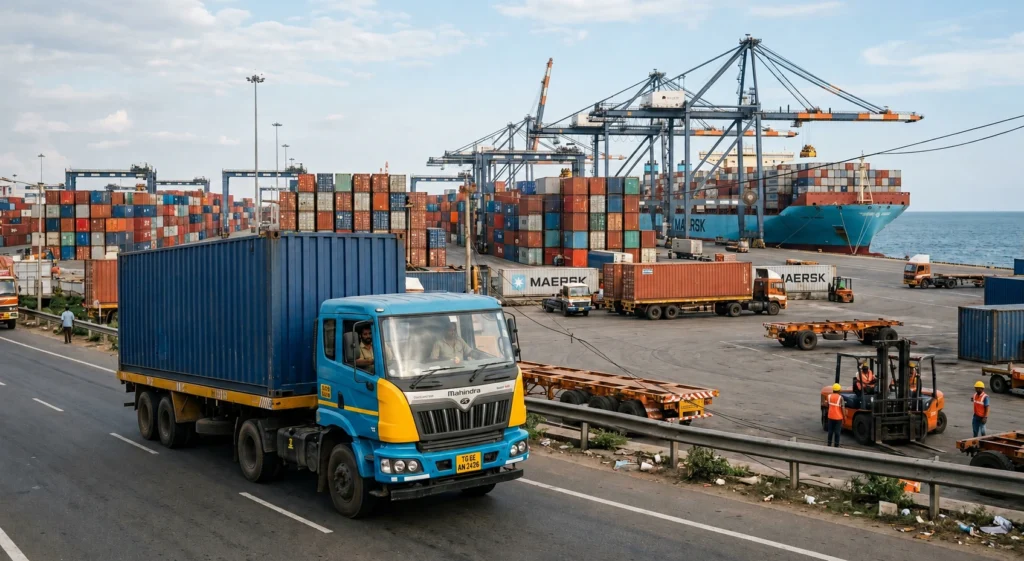
Logistics management has undergone a paradigm shift in recent years as a result of heightened market volatility and customer demand. For decision-makers, understanding the importance of supply chain management is critical for their company’s survival.
To navigate sudden fluctuations in demand, the modern ecosystem demands agile logistics management. Businesses must view their supply networks as strategic growth engines as supply chain transformation increases. This shift in perspective allows companies to build operational efficiency, protect bottom-line profitability, and ensure economic stability in a vast business landscape.
Why Supply Chain Management Importance Has Increased In Today’s Business Environment
Nowadays, market conditions are volatile on a global scale. Political and regulatory changes that disrupt the supply chain have made many traditional approaches obsolete. Such instability highlights the importance of supply chain management to a greater extent, as does the fact that single-sourcing is no longer viable in most cases.
In addition, to satisfy customers’ rising expectations, firms have to operate in a more transparent and rapid way than ever before. Those who fail to comprehend the importance of supply chain management in time will be overtaken by more agile competitors. When the situation in an economy goes down, a company needs reliable supply chain management to keep manufacturing, retail, and FMCG sectors running.
Industry Perspective:
The modern supply chain is highly integrated, which means that local supply chain disruptions may have a ripple effect around the world. Port congestion and raw material shortages are just some of the challenges that companies have to resolve to avoid operational downtime.
How Effective Supply Chain Management Drives Business Growth
Supply chain transformation directly triggers a business’s corporate expansion. When supply chain management is optimized, businesses unlock several growth layers:
- Improved Operational Efficiency: By streamlining workflows, a company can reduce cycle times and eliminate hurdles. This allows it to maximize the capacity of existing assets.
- Better Inventory Management: Logistics management that leverages the latest technology can enable a company to react to market changes in a heartbeat. This agility helps to secure a competitive advantage.
- Faster Market Responsiveness: Effective supply chain management can help a company to respond to certain market needs rapidly, giving it an edge over its competitors.
- Enhanced Customer Experience: By ensuring that goods and services are provided on time, resulting in customer satisfaction is achieved, leading to improved brand loyalty to your business.
- Scalability: To scale seamlessly, a company needs to maximize the performance and utilization of its logistics assets. A well-thought-out procurement strategy will help get there.
The Role of Supply Chain Management in Economic Stability
There’s a clear link between distribution efficiency and economic stability. Supply chains often function as the core system of industrial productivity on a national scale.
When logistics networks are fragmented, the economy suffers from inflation and product scarcity due to manufacturing halts. Whereas optimized corridors utilize smooth commerce, both domestic and international, ensuring that industrial manufacturing hubs receive raw inputs predictably. This allows businesses to maintain stable output volumes while safeguarding consumer purchasing power during a volatile period.
Expert Insight: Supply chain performance is linked to the bottom line. By optimizing supply chain management, a company can make the most of its logistics costs and protect its profit margins, which is essential in times of inflation.
Key Business Benefits Demonstrating Supply Chain Management Importance
- Improved Visibility to Drive Improved Decisions
Providing end-to-end visibility in supply chain management helps executives to maximize their insight into vendor performance and demand forecasting. The enhanced control translates into strategic rather than tactical management decision-making. - Risk Management & Disruption ControlEffective risk management often identifies vulnerabilities in tier-2 and tier-3 suppliers. Having redundant supplies and alternative logistics partners on standby helps minimize the damage in case of first-tier supplier defaults.
- Better Cost Optimization
From transportation management consolidation to warehouse automation, every link in the value chain gets scrutinized in strategic supply chain management. These efficiencies help to reduce the overhead costs of goods sold (COGS) and yield significant long-term savings. - Improved Customer Satisfaction
In the FMCG and retail sectors, a company’s ability to get its products on shelves is a critical element of its value proposition. Having a reliable supply chain, it will fulfill its SLAs to the buyer, securing customer loyalty. - Enhanced Operational Agility
Operational agility helps businesses to scale production or reduce it without incurring devastating costs. This flexibility is crucial while facing sudden shifts and seasonal spikes in consumer behaviour. - Long-term Competitive Edge
A streamlined supply chain can be a major competitive differentiator, as it allows a company to wow clients with fast delivery and favorable pricing.
Common Challenges Businesses Face Without Effective Supply Chain Management
When a business owner ignores their logistical performance, their operational results directly affect their bottom line. Here are the key challenges associated with ineffective logistics management:
- Inventory Inefficiencies: Too much inventory leads to high carrying costs, but too little results in lost revenue.
- Supply Disruptions: Without multiple sourcing, a single vendor failure can halt production entirely.
- Forecasting Challenges: Failure to account for supply-demand dynamics translates into inefficient inventory management.
- Customer Service Issues: Late deliveries and damaged goods can harm your B2B relationship and overall brand reputation.
- Operational Bottlenecks: Inefficient resource allocation, such as high transportation costs, hurts an organization’s profit.
How Technology Is Strengthening Modern Supply Chain Management
Modern tech has enabled supply chains to predict instead of traditional reactive tracking. Real-time analytics enable companies to manage operations strategically by giving logistics managers full supply chain visibility at any given moment. At the same time, data analytics helps estimate demand and prepare for disruptions. In addition, technological innovation in warehousing and logistics automation facilitates supply chain digitalization as a whole, fostering greater collaboration among ecosystem partners to extract maximum value.
Future Trends Reinforcing the Importance of Supply Chain Management
Decision-makers must align with industry shifts to maintain a competitive edge. Here are the key themes for tomorrow’s supply chain management:
- Supply Chain Resilience: Companies are prioritizing building supply chain agility and flexibility to be able to withstand global disruptions.
- Sustainability Initiatives: More companies are adopting eco-friendly logistics practices to reduce costs and meet ESG regulations and consumer expectations.
- Integrating Logistics Networks: Organizations are shifting towards multimodal transportation and shared warehousing, creating integrated logistics networks.
- AI-Decision Making: AI is being relied upon to make more accurate demand planning and inventory management decisions.
- End-to-End Visibility: Using blockchain and IoT devices to ensure transparency from raw material to final delivery.
Expert Insight:
Companies that are more agile in adopting new approaches to logistics management are better positioned to withstand global supply chain disruptions while simultaneously exploiting the competitive advantage of their more rigid rivals.
Best Practices for Strengthening Supply Chain Performance
To utilize these insights in operations, businesses should adopt the following strategic improvements:
- Diversify Supplier Network: This will help to mitigate geographical and geopolitical risks.
- Invest in Predictive Tech: Predictive analytics will enable a company to balance its procurement and sales strategies.
- Improve Cross-Departmental Alignment: Ensure your sales, marketing, and supply chain teams operate by using a unified software platform.
- Prioritize Vendor Collaboration: By engaging in collaborative supply chain management, an organization can gain a competitive advantage over its rivals.
The Impact of Supply Chain Management
Business Area | Impact of Strong SCM | Impact of Weak SCM |
Risk Management | Proactive disruptions control and continuity | Severe vulnerability to bottlenecks |
Financial Performance | Optimized margins and working capital | Cash flow tied up in stagnant inventory |
Customer Retention | High loyalty due to reliable delivery | Bad results from stockouts |
Market Expansion | Rapid scalability and smooth market entry | Inability to meet regional demands |
Operational Agility | Swift pivots during market volatility | Rigid processes that break under pressure |
Resource Utilization | Cost-effective procurement | High overhead and material waste |
Key Takeaways
- Supply chain management allows organizations to drive long-term growth strategies and maintain a competitive advantage.
- Operational performance and risk management are crucial in the market fluctuations that continue to affect the business world.
- End-to-end supply chain visibility is fundamental because it provides decision-makers with cost-saving opportunities.
- Investing in predictive analytics is essential for future-proofing logistics networks.
- Supply chain management ensures business continuity and economic stability amid global disruptions.
Conclusion
Understanding the importance of supply chain management is essential for decision-makers aiming to secure supply chain visibility while also taking the necessary steps to optimize the key resources that contribute to higher performance, which helps to transform supply networks into powerful growth engines.
Partner with experts to learn just how you can achieve your supply chain management needs and ensure economic stability for your organization. Contact ABK Supply Chain Management and Logistics to discover how our tailored solutions can optimize your operations.
FAQ (Frequently Asked Questions)
- Why is supply chain management important for business growth?
Ans.:- Effective supply chain management directly improves business growth by optimizing inventory, reducing operational costs, increasing speed to market, and ensuring consistent customer satisfaction. - How does supply chain management improve operational efficiency?
Ans.:- Supply chain management leads to improved business efficiency in several ways, including streamlining logistics operations to eliminate redundancies and waste while boosting productivity. - What role does supply chain management play in economic stability?
Ans.:- By enhancing economic stability through business continuity, supply chain management plays a critical role in the smooth running of international trade, maximizing resource utilization, and promoting the overall growth of the economy. - How does supply chain visibility improve decision-making?
Ans.:- With enhanced supply chain visibility, executives are in a position to make timely decisions due to the information they already possess. Allowing them to pivot sourcing strategies swiftly and make proactive decisions rather than reactive corrections. - What are the risks of poor supply chain management?
Ans.:- Poor logistics management often leads to such risks as high inventory costs, stockouts, poor customer service, and operational constraints, as far as the procurement process is concerned. - How does ABK Supply Chain Management and Logistics support supply chain optimization?
Ans.:- ABK has the expertise and experience to support your supply chain optimization needs while providing access to the latest transport and logistics solutions so that you can have enhanced control of your supply chains, cutting costs and boosting profits.