

As someone who has observed the development of online slots for years, I believe that truly creative games are rare. When Esqueleto Explosivo arrived onto the scene, it was a lively, chaotic, and utterly distinctive experience that carved its own niche. Now, the sequel, Esqueleto Explosivo 2 Slot, has arrived, vowing to enhance everything players loved. To grasp the artistic force behind this explosive follow-up, I pursued direct insights from the development team. This article reveals the creative approach, technical challenges, and artistic decisions that crafted this standout title, delivering a rare peek into the studio’s process from initial concept to the final, fiery release.
Art and Animation: Bringing Vitality into the Bony Characters
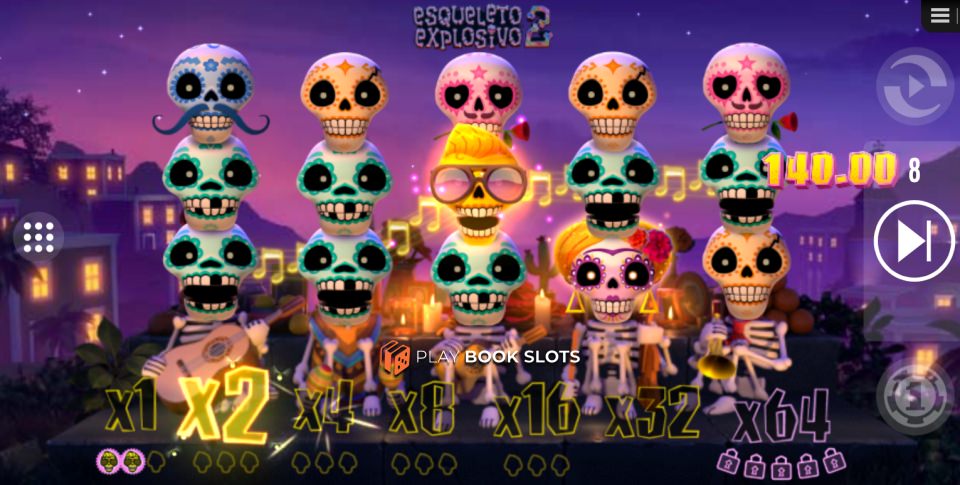
The art style of Esqueleto Explosivo 2 is misleadingly straightforward. Achieving that perfect balance between playful appeal and dark humor demanded countless iterations. The artists described that the skeletons needed to be joyful and energetic, not intimidating, with their sugar skull designs carefully crafted to be complex yet clear on tiny handheld devices. Each character, from the central mariachi skeleton to the backup musicians, was assigned a individual color set and accessory set to amplify visual interest during the frenetic gameplay. The background was enhanced, incorporating more parallax scrolling elements and celebratory touches like floating paper banners and twinkling lights, crafting a universe that feels alive and sprawling.
Animation was where the genuine technical skill shined. The developers integrated a advanced skeletal animation system, allowing for fluid, bone-driven motion of the personas. This is most evident in the triumph sequences; when a big win occurs, the full group explodes into a unified performance that is at once a bonus and a spectacle. The cascade mechanic itself is an animation marvel. Instead of images merely fading, they are shattered with custom particle effects, and new symbols tumble into alignment with authentic movement. The group dedicated many weeks fine-tuning the rhythm and “weight” of these cascades to make them appear pleasingly solid and impactful, a key element in preserving user interest through lengthy payout runs.
Sonic Identity and Sonic Branding
In a slot as visually rich as Esqueleto Explosivo 2, sound design is essential in steering the player’s feelings. The audio team defined their strategy as “orchestrated chaos.” The base track is an genuine, upbeat mariachi tune, but it’s dynamically built. During the base game, it holds a festive but steady tempo. As a cascade sequence starts and the multiplier climbs, brass instruments grow, and the percussion becomes more noticeable, subtly boosting the excitement without overwhelming the player. The most dramatic audio shifts are kept for the Nitro Feature and big wins, where the music hits a crescendo accompanied by a riot of festive sound effects.
Every separate part has a unique sonic signature. Different skeleton symbols have their own short musical stings when involved in a win. The cascade itself is followed by a satisfying “pop” and tumbling sound, while the multiplier rising is signaled by a definite, rising tonal cue. This thorough audio feedback is vital; it enables players to grasp precisely what is taking place on the reels even when they only look at the screen. The team emphasized that great slot audio isn’t just background music; it’s a critical information delivery system and an feeling driver, making wins feel more tangible and the overall experience more integrated and refined.
Technical Hurdles and Optimization Challenges
Developing a slot with this level of constant animation and real-time particle effects introduced significant technical hurdles esqueletoexplosivo2.net. The primary challenge was guaranteeing seamless performance across all devices, from high-end desktops to older smartphones. The developers built a custom rendering pipeline to process the hundreds of animated sprites and particles that can be on screen simultaneously during a large cascade. They implemented level-of-detail systems that automatically lower visual complexity on less powerful devices without sacrificing the core game feel, guaranteeing the explosive personality remained intact even on smaller screens.
Another major focus was the game’s memory management. With high-resolution assets for numerous symbols and animations, loading times were a worry. The team employed advanced texture atlasing and asset streaming techniques to keep the initial load quick and ensure smooth transitions during gameplay. The sophisticated cascade and multiplier logic also demanded robust and bug-free code to address edge cases, like multiple Nitro triggers in a single spin. Rigorous testing across a vast matrix of devices and network conditions was essential to deliver the stable, polished experience players expect from a major studio release, where a single graphical glitch or lag spike can break immersion.
Math and Mechanics: Creating the Nitro Feature
The math model, or arithmetic behind the slot, is its invisible engine. For Esqueleto Explosivo 2, the critical task was integrating the new Nitro Feature without disrupting the careful harmony of the existing cascade system. The main game retains the popular rising multiplier that rises with each following cascade, only resetting on a unsuccessful spin. The creators examined large datasets from the original game to set a hit frequency and volatility that was both familiar and fresh. The Nitro Feature, activated by collecting nitro symbols, was created as a controlled volatility spike. When triggered, it ensures a cascade by swapping out low-value symbols, but its position is random, producing moments of intense excitement.
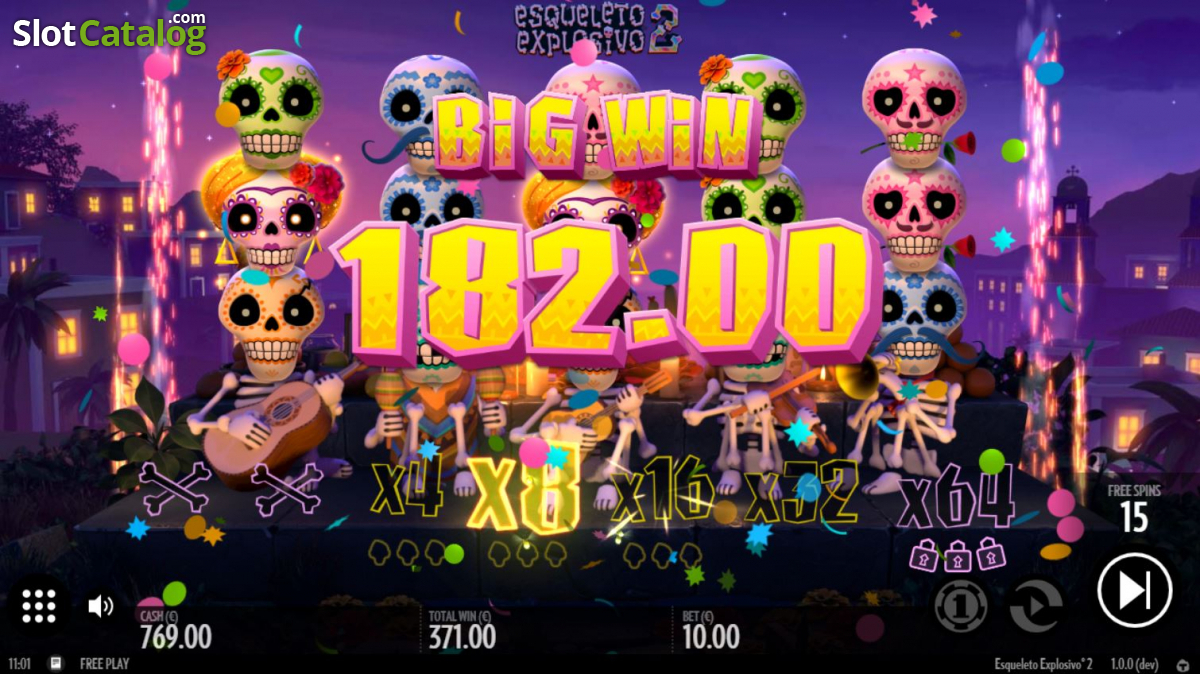
Balancing this feature was a complex task. The group performed thousands of simulations to ensure the Nitro meter charged at a speed that felt rewarding but not too frequent, maintaining its rare occurrence status. They also had to adjust the power of the Nitro explosions to deliver major payout potential without causing the base game to seem less appealing in relation. The outcome is a game with a dual-layer volatility: the constant, rising pressure of the base game interrupted by the explosive, high-stakes moments of the Nitro activation. This produces a more varied pace, attracting players who enjoy both long gaming sessions and the chase for thrilling, special-feature wins.
The Core Concept: Advancing the Volatile Formula
The initial Esqueleto Explosivo was a runaway success, defined by its cascading wins, increasing multipliers, and a colorful Mexican Day of the Dead theme. The primary challenge for the developers wasn’t just creating a sequel, but refining a cherished formula without forfeiting its soul. The core directive was “more dynamism, more engagement, and more strategic depth.” They recognized that while players adored the growing tension of the original, they sought more paths for influence and bigger possible peaks. This resulted in the foundational idea of the Nitro Feature, a player-triggered bonus that acts as a strategic layer on top of the already volatile base game. The goal was to change a purely passive experience into one where players could, at key moments, feel a sense of agency, choosing when to insert pure chaos into the reels for potentially enormous rewards.
Another fundamental pillar was broadening the audiovisual spectacle while keeping clarity. The team knew the sequel needed to seem instantly familiar yet visually superior. They improved the skeleton characters, giving them more personality and smoother animations, and greatly enhanced the particle effects for explosions and cascades. The soundtrack and sound design got equal attention, with more complex music that adapts to gameplay intensity and sharper, more powerful sound effects for every tumble and win. This meticulous attention to sensory detail guarantees that every spin is an captivating event, expanding on the original’s strong identity rather than merely copying it.
User Response and Cyclical Design
The development of Esqueleto Explosivo 2 was not carried out in a isolation. Early models were shown to review groups consisting of both fans of the original and new players. The developers closely tracked which features generated excitement and which resulted in confusion. Initial plans for the Nitro meter, for example, were more intricate, involving different nitro types. Feedback revealed this was too much, leading to the streamlined, single-meter system seen in the finished game. Similarly, early versions had a more subdued color scheme, but testers consistently commented it lacked the punch of the original, guiding the artists back toward brighter, more saturated colors.
This iterative process carried over to the game’s tempo. Data from game tests indicated that while gamers appreciated the big multiplier jumps, there could be long periods without a Nitro trigger. The team tweaked the symbol arrangement and meter fill frequency to create a more consistent pattern of lesser excitements between the major event events. This player-centric approach was crucial; it made sure the game was being formed not just by blueprints, but by authentic human responses and interaction trends, leading to a finished product that seems tuned for enjoyment rather than just theoretical rules.